


Jigsaw Puzzle - Countryside
4.6239.00 Reviews
App Specs
- Version
- 1.2.0
- Updated On
- License
- Free
- Downloads
- 100,000+
- Developer
- Mint XX Games
- Categories
- Board
- Platform
- Android
Screenshots
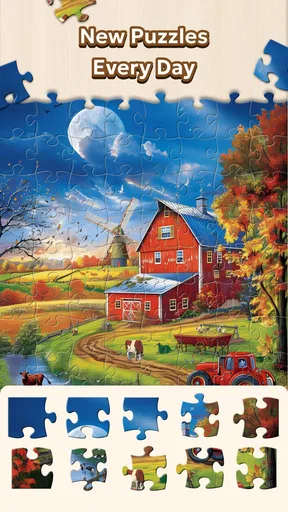
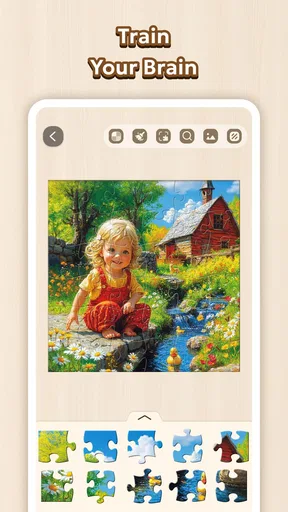
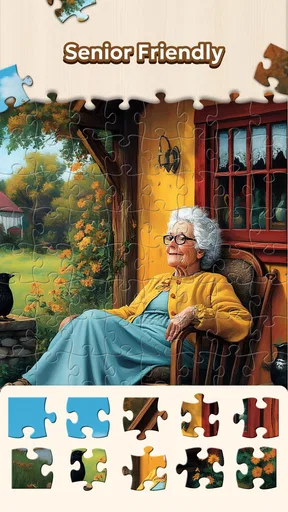
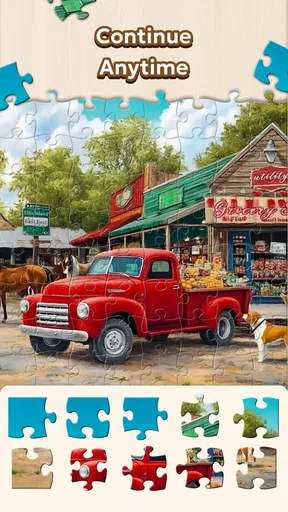
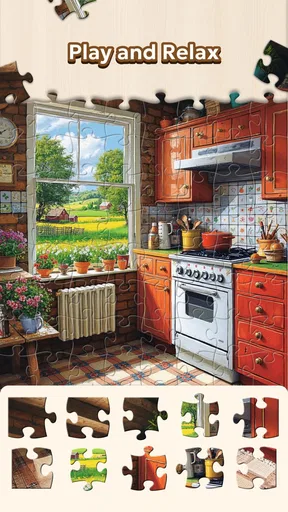
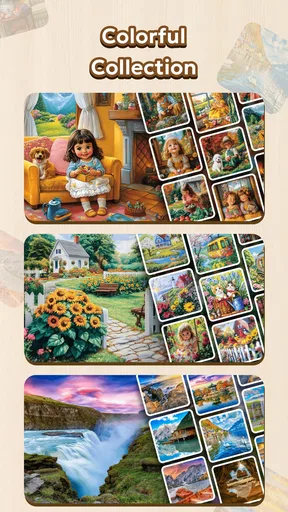
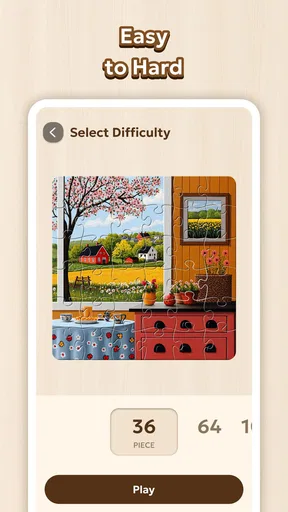
 Analysis by AppCompare
Jigsaw Puzzle - Countryside is the kind of board game I open when I want something quiet rather than competitive. Its focus is straightforward: assemble illustrated countryside scenes from individual pieces, take a break from a busy day, and let the picture gradually become clear. After spending time with it, I found that its main appeal is not surprise or complexity, but the way its art, gentle pace, and simple interaction work together.
That simplicity is important. This is not a strategy game with a long learning curve, and it does not try to turn every puzzle into a test of speed. It is a free game from Mint XX Games, available for players rated Everyone, with a current version of 1.2.0 and support for Android 6.0 or later. The store presents it as a large collection of high-definition jigsaws with daily play intended to exercise the mind and help you relax. In practice, I think it works best as a flexible little ritual: a few pieces while waiting for an appointment, or a longer session at the end of the evening.
A calm first impression built around the picture
My first impression was shaped more by the visual subject matter than by any elaborate presentation. Countryside imagery naturally gives the game a softer identity than puzzle collections built around abstract patterns, crowded city scenes, or brightly colored objects. The setting suggests open fields, rural paths, gardens, cottages, and changing natural textures. Even before completing a puzzle, the promise of a recognizable landscape gives the activity a clear emotional direction.
That direction matters because jigsaw games can easily feel like sorting work. When the image has a coherent setting, every small section feels connected to a place rather than being a random patch of color. I found myself using likely visual landmarks first: a roofline, a fence, a tree edge, or a strong change between sky and ground. This makes the opening stage less intimidating than a picture made entirely from similar shades.
The game is also easy to understand without a tutorial-heavy introduction. A player who already knows physical jigsaws will recognize the basic goal immediately, while someone new to the format can learn by touching and arranging pieces. That accessibility suits the Everyone rating. I could imagine younger players enjoying the visual matching, although adults looking for a more demanding challenge may eventually want to choose scenes with denser detail or more repetitive textures.
One useful habit is to treat the completed image as a map rather than trying to place pieces randomly. I begin with the most distinctive areas, then separate pieces by broad visual families such as sky, vegetation, buildings, and ground. This approach is especially helpful on a phone, where the smaller display can make a large pile of pieces feel visually crowded. It also turns the game into a relaxing form of concentration instead of a sequence of guesses.
Why the rural setting gives the game its identity
The countryside theme is more than a decorative label. It determines the kind of attention the puzzles ask from me. Natural scenes often contain gradients, leaves, grass, clouds, and similar colors, so they reward patience and recognition of small shapes. At the same time, they usually offer strong compositional anchors that help prevent the entire board from becoming meaningless noise.
Worth Reading Before You Choose

EA SPORTS FC Mobile 26 Is a Bigger Football Game, but It Takes Time

Flipboard Shows What News Apps Must Do Beyond the Feed

Switching to Android Auto Means Rethinking Your Driving Routine

Google Calendar Makes a Crowded Week Easier to Manage

Ludo King Makes the Most of the Minutes Between Plans

Baby Panda World Brings Quick Play to Modern Phones, but Its Game Library Feels Busy
I enjoyed the contrast between open areas and detailed objects. A broad sky can provide an approachable starting point, while a cluster of trees or a textured field creates the slower middle section. That changing visual density gives each puzzle a natural rise and fall. The picture begins with obvious progress, becomes more deliberate in the middle, and then accelerates again once enough of the scene is assembled to reveal where the remaining pieces belong.
This is also where the art direction affects replay value. A countryside collection can become repetitive if every image relies on the same arrangement of green fields and blue skies. The strongest scenes are the ones with a clear focal point and varied surfaces, because they offer different solving routes. I would choose a puzzle with a cottage, path, or distinctive tree line when I want a comfortable session, and reserve more uniform landscapes for a day when I am specifically looking for slower concentration.
The high-definition presentation is useful here because fine details are not merely ornamental. Small edges, color transitions, and object outlines can provide clues when several pieces look alike. On a larger screen, that visual clarity should be easier to appreciate; on a smaller phone, I would expect to rely more on zooming or careful repositioning. The image quality supports the puzzle rather than distracting from it.
Sound, silence, and the rhythm of a session
The mood of a jigsaw game depends heavily on how much it interrupts the player. I prefer this category when the audio stays in the background, because the central pleasure comes from visual focus and the small satisfaction of making a correct connection. In my sessions, the most effective rhythm came from alternating between active searching and quiet stretches where I simply scanned the board.
That rhythm is different from the loop of a timed board game. There is no need for constant urgency in the countryside setting. A player can stop after completing a section and return later without feeling that the experience has punished a slower pace. This makes it a good fit for short breaks, but it also means that anyone seeking dramatic momentum should look elsewhere. The game’s atmosphere depends on restraint, not escalating excitement.
I found that the best way to use it is to decide what kind of session I want before starting. For a short break, I focus on a visible cluster and stop once the scene has noticeably developed. For a longer evening session, I sort pieces into broad groups and allow the puzzle to become the main activity. This small distinction prevents the game from feeling aimless. It also makes the daily-play idea more practical, because a daily puzzle can become a routine without requiring a large time commitment.
There is a trade-off in this calm design. Relaxation can blur into repetition if I play for too long without changing the visual challenge. A player who wants constant novelty may find the steady pace too gentle, especially if they prefer action, competition, or story progression. I would not recommend it as a replacement for a traditional strategy board game. Its satisfaction comes from completion and visual order, not from outthinking another player.
How the mechanics support the artwork
The central mechanic is familiar, but its quality depends on how comfortably the pieces can be examined, moved, and compared. On a touchscreen, the main challenge is balancing a piece’s size with the amount of the image visible at once. If pieces are too small, the puzzle becomes fiddly; if the board is too zoomed in, I lose the larger composition that helps me solve it. I found that alternating between close inspection and a wider view is more effective than staying at one scale.
My most useful workflow is to solve in layers. I first identify obvious boundaries and strong colors, then build recognizable objects, and only afterward work through the similar-looking natural textures. This is not a feature I would expect a store description to explain, but it makes a real difference in countryside scenes. It also gives the session a sense of progress even when the final portion is slow.
Another practical tip is to avoid treating every loose piece as equally urgent. I keep attention on a small region, look for matching contours, and use the completed sections to narrow the possibilities. This reduces the mental clutter that can make a simple puzzle tiring on a phone. When I feel stuck, I step back to the full image instead of repeatedly testing the same few pieces. Often the missing clue is a change in color or object direction that is easier to see from a distance.
The game’s free entry is a clear advantage for trying the format. It lets a curious player see whether countryside jigsaws fit their habits before spending anything. At the same time, in-app purchases range from $4.99 to $29.99 per item, so I would pay attention to the purchase flow and decide in advance whether I want to keep the experience entirely free. The presence of optional spending does not change the basic appeal, but it is worth remembering for families or anyone handing the device to a child.
Because the game is free, it is also sensible to approach it as a collection to sample rather than something that must replace every other puzzle app. If you enjoy the art direction and return regularly, the broader catalog may become valuable. If you only want an occasional jigsaw, the free starting point may be enough. That distinction helps set realistic expectations and avoids assuming that a large selection automatically guarantees that every image will suit every player.
Who will enjoy it, and who should choose another game
I think this game is especially well suited to people who like low-pressure visual tasks. It can fit into a morning routine with coffee, a quiet commute when the player is seated, or a wind-down period before bed. For example, after a demanding workday, I might spend a short session completing the recognizable parts of a rural scene, leave the similar grass pieces for later, and return when I want something absorbing but not mentally aggressive. That kind of use is where the setting and mechanics feel most coherent.
It may also work for families who want an approachable board-style activity on a shared device. The Everyone rating supports its broad accessibility, and the rules are simple enough that a child and adult can understand the objective together. I would still supervise purchases and choose the difficulty or image carefully, since a very repetitive scene could frustrate a younger player while an overly simple one might bore an experienced puzzler.
I would skip it if my priority were head-to-head competition, deep strategy, rapid rounds, or a narrative campaign. A classic digital board game may be a better choice when I want decisions to affect an opponent. A dedicated puzzle app with stronger customization could be preferable if I care about controlling piece counts, shapes, or detailed challenge settings. Likewise, a physical jigsaw remains better for people who value tactile pieces, a large shared table, and the social feeling of solving together in the same room.
Compared with a generic jigsaw collection, the countryside focus gives this game a more consistent emotional identity. Compared with a physical puzzle, it is more convenient and easier to pick up for a few minutes. Compared with competitive board games, it is far less demanding and much less social. None of those differences is automatically good or bad; they simply define the experience. I would choose this one when atmosphere and convenience matter more than tactile realism or strategic tension.
Practical expectations before installing
The game has passed the stage of being an unknown experiment for many players, with over one hundred thousand installs and a 4.6 average from around ten thousand ratings. Those figures suggest that its accessible format is connecting with a substantial audience, but they should not be mistaken for a guarantee that every player will enjoy the same pace. A person who dislikes repetitive visual sorting will probably feel that limitation quickly.
Mint XX Games has positioned the release as a free board game rather than a premium-only product. It was released on December 1, 2025, and the current version is 1.2.0. I would make sure the device meets the Android 6.0 minimum before trying it, particularly on an older phone. That requirement is modest, but checking compatibility first avoids an unnecessary installation attempt.
The most important expectation is that the game’s pleasure comes from gradual completion. It is not designed around a dramatic reveal after every move. The art gives me a reason to continue, while the piece-matching mechanic supplies small, regular rewards. If I approach it expecting a calm visual notebook rather than an energetic game, the design makes much more sense.
I would also keep an eye on session length. The relaxed mood can encourage me to continue longer than intended, especially when a nearly finished scene makes the last few pieces feel irresistible. Taking a pause when the board becomes visually tiring is not a failure; it is part of using this type of game well. Returning with fresh attention often makes the final section easier.
My atmosphere verdict
Jigsaw Puzzle - Countryside succeeds because its subject, pace, and core interaction point in the same direction. The rural artwork encourages patient observation, the board-game format keeps the rules approachable, and the unhurried rhythm leaves room for the player to decide how much attention to give each session. I appreciate that it does not need a complicated system to create a recognizable mood.
Its limitations are equally clear. The experience may feel too quiet for players who need competition or constant change, and the familiar jigsaw structure cannot provide the strategic depth of a more traditional board game. In-app purchases also mean that free access should be approached with sensible spending boundaries. These are not small details, but they are easy to weigh against the game’s intended use.
For me, the strongest reason to try Jigsaw Puzzle - Countryside is its focused atmosphere. I can open it when I want my attention occupied without being pressured, use the landscape as a visual guide, and stop whenever the session has done its job. The broad puzzle selection, accessible entry point, and countryside identity make it a good recommendation for relaxed solo play.
I would recommend it to a friend who enjoys scenic images, gentle repetition, and the satisfaction of watching disorder become a finished picture. I would not recommend it to someone searching for tactical decisions, multiplayer rivalry, or a fast-moving challenge. Within its chosen lane, though, it is a pleasant and coherent board game: simple enough to start immediately, thoughtful enough to reward a few useful solving habits, and calm enough to become part of an everyday routine.
Pros
- Relaxing countryside scenes create a calm
- low-pressure puzzle experience.
- Multiple difficulty levels suit both casual players and puzzle enthusiasts.
- Helpful tools make difficult puzzles easier to complete.
- Offline play is convenient for travel or areas with limited internet.
- Frequent new images can keep the experience feeling fresh.
Cons
- Some puzzles may feel repetitive after extended play sessions.
- Hints or boosters may be limited unless earned or purchased.
- Small pieces can be difficult to handle on compact phone screens.
- Progress may be interrupted if app data is cleared or devices are changed.
- Advertising can reduce the relaxing atmosphere between puzzles.
FAQs for Jigsaw Puzzle - Countryside
What is Jigsaw Puzzle - Countryside?
Jigsaw Puzzle - Countryside is a relaxing puzzle game centered on scenic rural landscapes. It lets you assemble colorful countryside images piece by piece, making it suitable for casual players who enjoy quiet, low-pressure gameplay. The rural artwork typically includes fields, farms, villages, animals, and natural views, creating a pleasant experience for short sessions or longer puzzle-solving breaks.
How does the gameplay work, and is it suitable for beginners?
The gameplay is straightforward: choose a countryside picture, select a difficulty or number of pieces when available, and drag the pieces into their correct positions. Beginners can start with smaller puzzles and gradually increase the challenge. The familiar jigsaw format makes the game easy to understand, although larger puzzles require more concentration and patience as the number of similar-looking pieces increases.
Can I play Jigsaw Puzzle - Countryside offline?
Many puzzle games in this category allow the main jigsaw experience to be played without a constant internet connection, which is convenient while traveling or when mobile data is limited. However, features such as advertisements, bonus content, new image downloads, cloud synchronization, or in-app purchases may require internet access. It is best to open the game once online after installation and check which features remain available offline.
Does Jigsaw Puzzle - Countryside contain advertisements or in-app purchases?
The game may use advertisements to support free access, and ads can appear between puzzles or when players request optional hints and rewards. Depending on the version, additional picture collections, puzzle packs, or ad-removal options may also be offered through in-app purchases. Before downloading, review the store listing and purchase settings, especially if children will be using the application.
Is Jigsaw Puzzle - Countryside appropriate for children and families?
Jigsaw Puzzle - Countryside is generally family-friendly because its core activity involves assembling landscape images rather than combat, competition, or complicated story content. It can help children practice visual recognition, patience, and hand-eye coordination, although younger users may need easier puzzle settings and occasional assistance. Parents should still review the app’s advertising, permissions, and possible purchase options before allowing unsupervised use.


